

This Spring, the United States Military Academy at West Point announced both its 2024 university and preparatory academy accepting classes.
Among those granted acceptance to the university and prep academy are five 25th Infantry Division active-duty Army Soldiers.
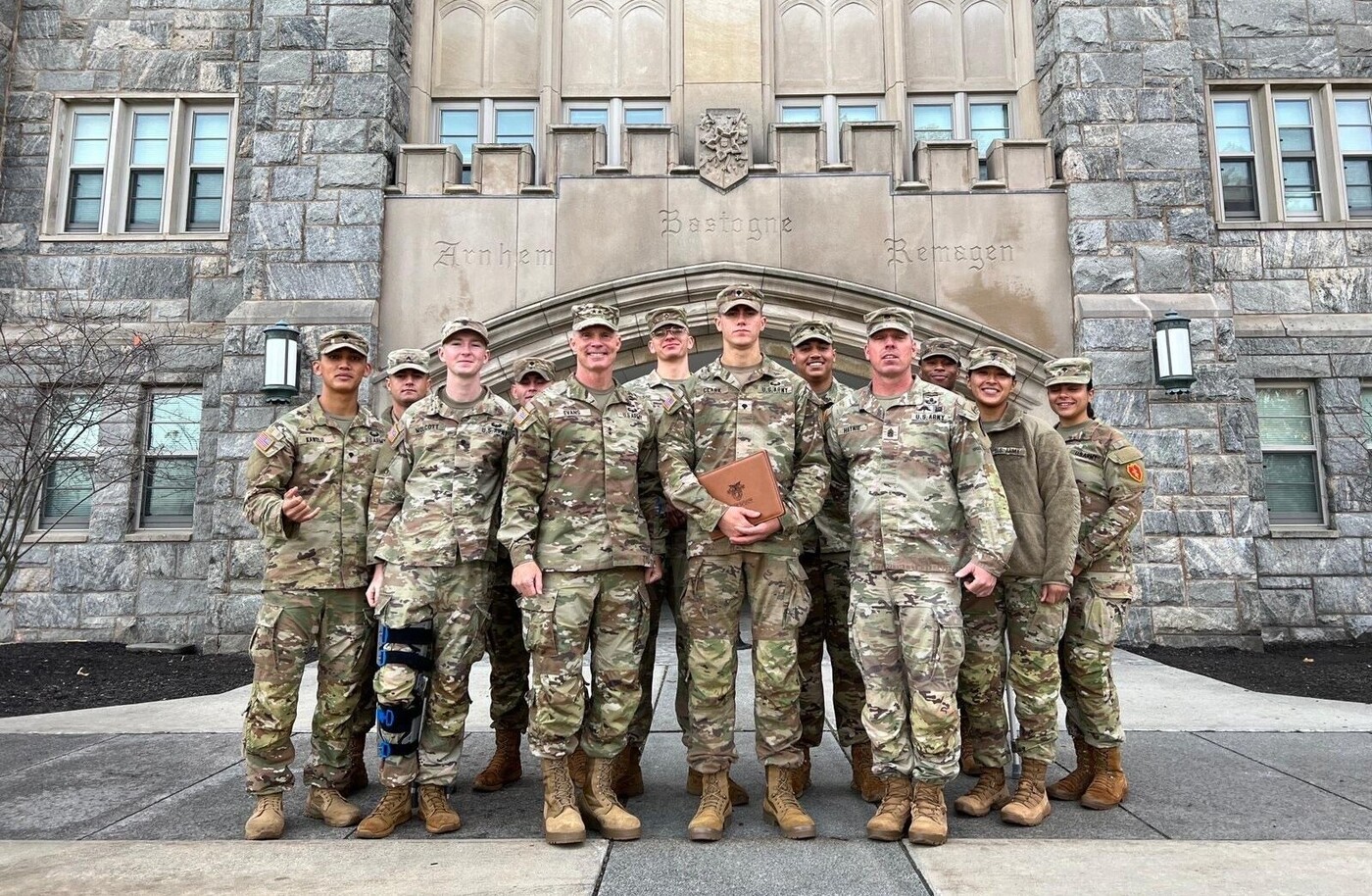
The two Soldiers accepted to the Academy include Sgt. Quinlan Clark with 2nd Battalion, 35th Infantry Regiment, 3rd Infantry Brigade Combat Team; and Spc. Christopher Thompson, with the 65th Brigade Engineer Battalion, 2nd Infantry Brigade Combat Team.
The three Soldiers accepted to the preparatory academy include Spc. Benjamin Jesse with 3rd Battalion, 25th Aviation Regiment, 25th Combat Aviation Brigade; Spc. Nasir Clark with Headquarters and Headquarters Battery, 25th Infantry Division Artillery Brigade; and Spc. Samuel Wolcott with 2nd Battalion, 35th Infantry Brigade, 3rd Infantry Brigade Combat Team.
The “Lightfighters” have all committed themselves to not only pursuing higher education but to transitioning from enlisted service members to commissioned officers by furthering their military careers.
“Congratulations and thank you for representing this division and our Army,” said Maj. Gen. Marcus Evans, the 25th Infantry Division and U.S. Army Hawaii commanding general to the soon-to-be cadets.
The U.S. Military Academy Preparatory School — known as USMPAPS, the Prep School, or West Point Prep — was formally established in 1946, but the history of “prepping” Soldiers for West Point has been done since Congress enacted legislation in 1916 authorizing Solider appointments to West Point.
The academy exists today as an avenue of opportunity for a carefully selected group of Soldiers and civilians by providing them with the academic, leadership, and physical skills that will prepare them for success as cadets at the U.S. Military Academy.
Jesse, one of the preparatory school acceptees, recalled his first exposure to West Point and how it encouraged him to want to attend the academy.
“I was one of ten that got invited to West Point around November of last year,” said Jesse. “I toured the campus, watched a football game, and realized that this was an opportunity. I couldn’t pass it up.”
Jesse, an Orlando, Florida native, said that he was filled with mixed emotions when he found out that he had been selected to attend the preparatory academy.
“My 1st sergeant called me over with a few of my peers and told me I had been accepted. There was a lot of joy, and a little bit of nervousness as I took a new step into my life, and me and my peers were able to rejoice because my leadership and unit have always been excited for me and tried their best to help me succeed.”
Spc. Clark is another preparatory school acceptee who recalled his excitement when he found out via prank from his commander that he had been accepted into the program.
“While at the brigade St. Barbara’s Ball in April, the brigade commander, Col. [Joseph] Katz was making an announcement congratulating people, then he said that there was an Article 15 Solider in the room and called me on stage,” said Clark. “I was nervous going up, but once I did, he told me that I had been accepted to the prep academy in front of the entire brigade. Everyone was standing and clapping; it’s a moment that I’ll never forget.”
Clark, a Birmingham, Alabama native, noted how once he was presented with the opportunity of applying for the program, both his family and his leadership were by his side and encouraging him throughout his application process.
“My family was pushing me the whole time, and they’re super excited,” said Clark. “My family would send me stuff about West Point, and now that they know I got accepted, they already have West Point paraphernalia and gear.”
Established in 1802, the United States Military Academy, or West Point, is renowned for producing exceptional leaders. Initially founded by President Thomas Jefferson to train officers for the rapidly expanding Army of the time, West Point has continued to evolve to our nation’s needs and upholds its mission of educating, training, and inspiring cadets to become leaders of character, prepared to serve their country with honor and distinction.
“You all represent a relentless pursuit of excellence as evidenced by your selection to attend West Point in the upcoming year,” said Evans.
Both Jesse and Clark expressed their excitement and anticipation to attend the preparatory school.
“I’m excited to see where this journey takes me,” said Jesse. “So far, everyone around me has embraced this new change with open arms. After commissioning I hope to be promoted to Captain in under five years.”
“I’m looking forward to learning more, meeting new people, and learning how to become a greater leader,” said Clark. “I know a lot of people who just take things one day at a time, but I think that’s not something people should do, especially when opportunities are in front of you. Take advantage and capitalize on those things; I did, and now I’m in a really good school and looking forward to the future.”
The Department of the Army announced today the creation of a new program designed to help potential recruits to meet the service’s rigorous enlistment standards.
The Future Soldier Preparatory Course pilot program – set to start in early August at Fort Jackson, SC – will provide education and training to help American youth overcome academic and physical fitness barriers to military service.
“The Future Soldier Prep Course allows recruits, who meet all other qualifications for enlistment, a path to serve,” said Gen. Paul E. Funk II, Commanding General, Training and Doctrine Command. “The young men and women who will participate in this pilot have the desire to improve themselves and want to honorably serve their country. This course is a great way to increase opportunities for them to serve without sacrificing the quality needed across our force.”
The course is in response to the precipitous drop in the number of young Americans meeting Army enlistment standards. Only 23 percent fully meet the Army’s eligibility requirements, down from 29 percent in recent years. The effects of the COVID pandemic over the past two years have only exacerbated barriers to enlistment for many young Americans, with drops in test scores and rising obesity across the nation.
“This course is one of many approaches the Army is taking to invest in America’s young people,” stated Funk. “We have to acknowledge that society has changed and help our youth improve so they can benefit from the training and opportunities that Army service provides. The Army is still the best place for young people to achieve their potential.”
The pilot program will provide focused academic and fitness instruction to help recruits meet the Army’s desired accession standards for body fat composition and academic test performance prior to basic training. It includes two separate tracks: a fitness program and an educational program for recruits who need help improving their scores on the Armed Forces Qualification Test (AFQT).
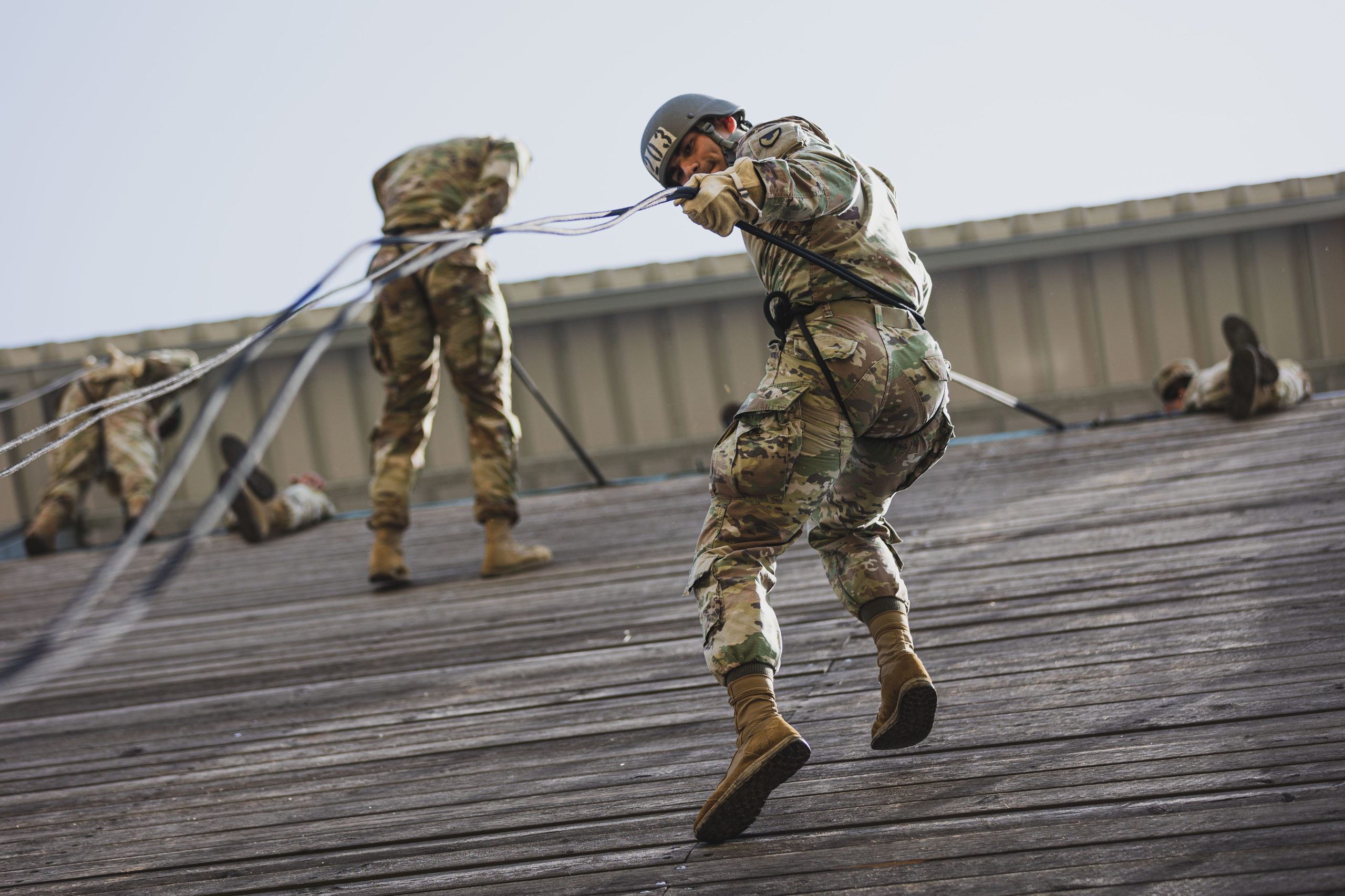
Individuals in both tracks are projected to remain in the FSPC for a maximum of 90 days, with opportunities every three weeks to leave the program and ship to basic training if they meet or exceed the Army’s desired accession standards.
As part of their pre-enlistment process, all trainees will still have to take the gender-neutral Occupational Physical Assessment Test (OPAT), administered by a recruiter, to qualify for the physical demand level required for an Army MOS before they participate in the preparatory course. Access to this program will allow these individuals who already meet all other qualifications for enlistment – including moral and medical accession standards – a path to serve. Recruits admitted through this program will further be required to meet all Department of Defense enlistment and training standards, ensuring the overall quality of the force.
Recruits with an Armed Services Voluntary Aptitude Battery (ASVAB) score of 21-30 may only participate in the academic track. Recruits with an ASVAB score between 42-49 may be allowed to voluntarily participate in both tracks, the fitness portion before basic combat training and the academic portion following basic training. Individuals who improve their score above 50 move into the desired higher standard test score categories and are potentially eligible for additional MOS opportunities or enlistment incentives. A score of 31 is the minimum required under current accession guidelines for recruits in the fitness track.
The fitness course is an expansion of the current Assessment of Recruit Motivation and Strength (ARMS) 2.0 program, which allowed recruits above the two percent body fat standard. Those recruits shipped straight to basic training, were closely tracked throughout their enlistment and were ultimately subject to existing Army physical fitness standards. The
expansion of ARMS 2.0 will place recruits who exceed the accession body fat composition standard by greater than two percent, but no more than six percent in the fitness track of the Future Soldier Preparatory Course.
“This course allows us to unleash unrealized potential by surrounding trainees with experts that they likely would not have access to at home,” said Brig. Gen. Patrick Michaelis, the U.S. Army Training Center and Fort Jackson Commanding General. “With the right instruction and professional support, we are confident they will be able to perform successfully and meet the standards expected of every Soldier.”