


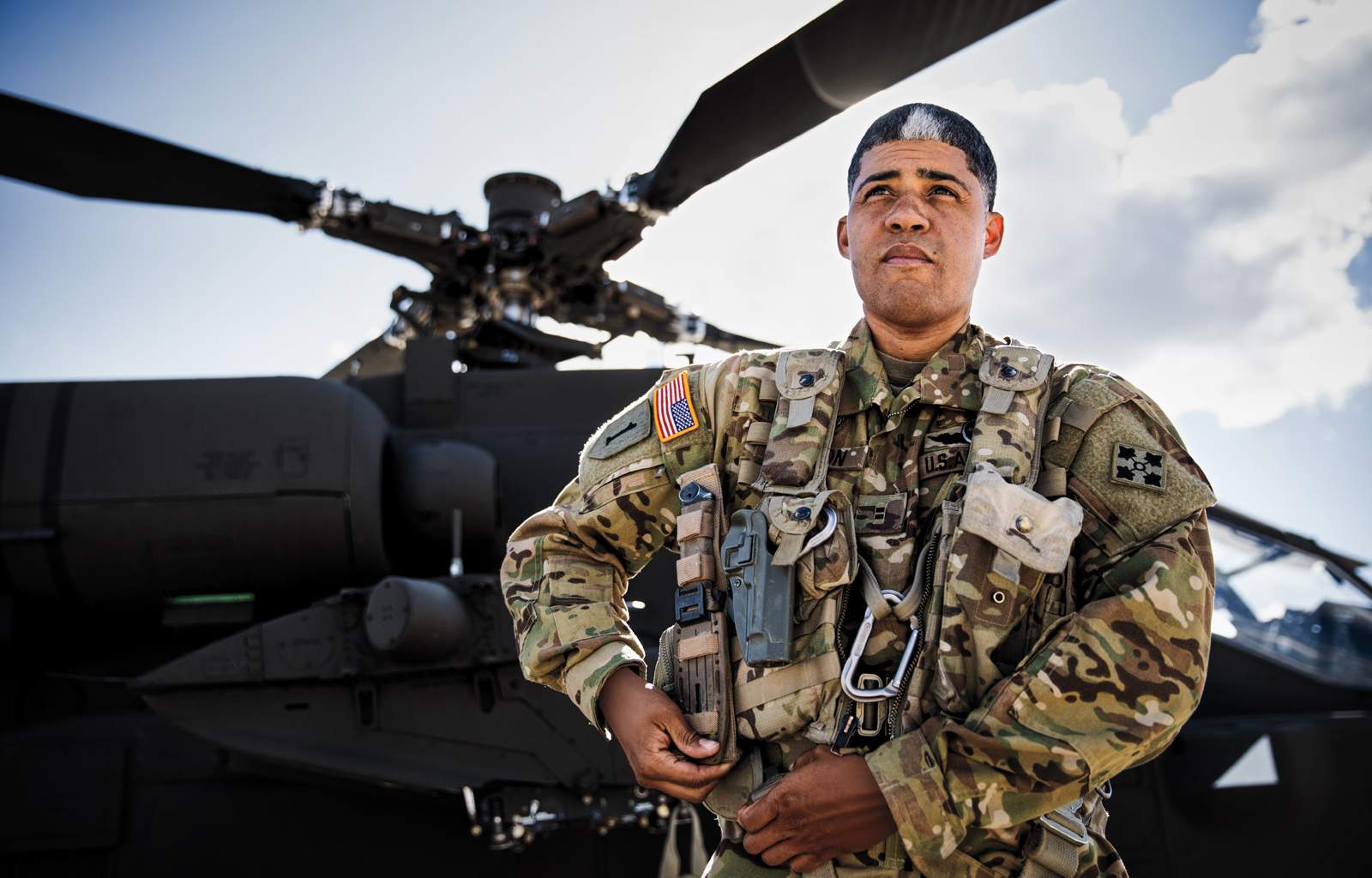
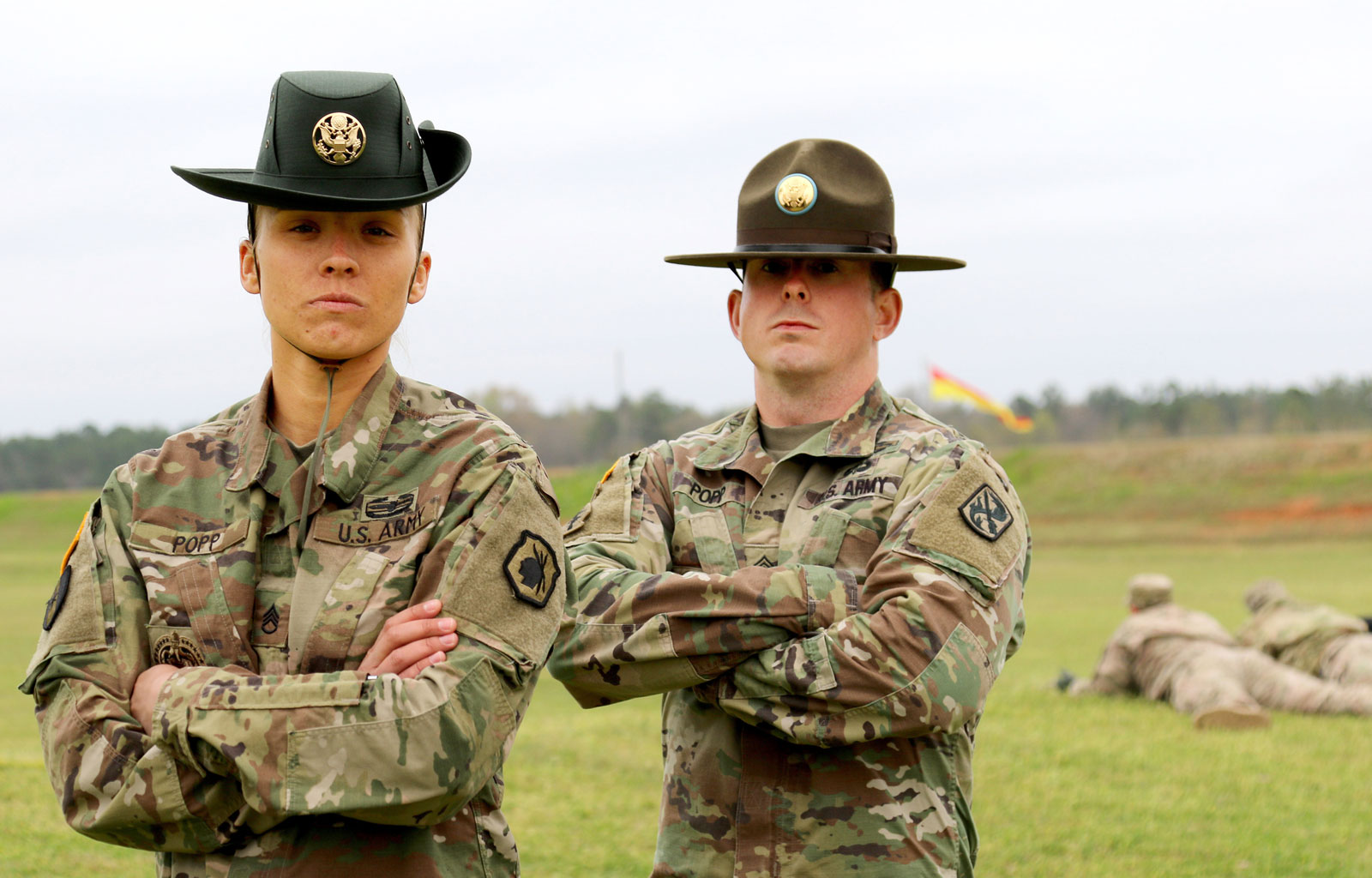
Being a drill sergeant is one of the most demanding and difficult jobs in our Army, but it is also one of the most rewarding. A drill sergeant is a symbol of excellence in initial entry training, an expert in all warrior tasks and battle drills, lives the Army values, exemplifies the Warrior Ethos, and most importantly, is the epitome of the Army as a profession.
As a drill sergeant, you are responsible for coaching, counseling, and mentoring hundreds, if not thousands, of trainees as you transform them from a civilian volunteer to a combat-ready Soldier. You are all that your Soldiers know of the Army and they emulate everything you do. Just as you will always remember your drill sergeant, so will your Soldiers. It is up to you to provide a positive and rewarding experience as these young Soldiers begin their journey in the Army. What you do for them will impact them for the rest of their lives.
THE MAKING OF A DRILL SERGEANT
The U.S. Army Drill Sergeant Academy (USADSA) at Fort Jackson, S.C. trains, educates, certifies, and validates a noncommissioned officer’s ability to execute and teach the core tenants of basic combat training, which includes physical readiness training, drill and ceremonies, basic rifle marksmanship, warrior tasks, and battle drills.
As leadership is an art, not a science, the academy must professionally train and develop drill sergeants of character who are capable of transforming civilian volunteers to Soldiers. The USADSA establishes standards, drives improvement, and leads change to ensure drill sergeants produce Soldiers who are highly trained, disciplined, physically fit, mentally and spiritually tough, and morally grounded.
For more information on the USADSA, view their milSuite page (CAC-enabled).
For more information on how to become a drill sergeant, read TRADOC Regulation 350-16 and MILPER Message 21-260: Update to the Selection Criteria for Drill Sergeant and Recruiter (CAC-enabled).
DRILL SERGEANT CREED
I am a Drill Sergeant.
I will assist each individual in their efforts to become a highly motivated, well-disciplined, physically and mentally fit Soldier, capable of defeating any enemy on today’s modern battlefield.
I will instill pride in all I train, pride in myself, in the Army, and in the country.
I will insist that each Soldier meets and maintains the Army’s standards of military bearing and courtesy, consistent with the highest traditions of the U.S. Army.
I will lead by example, never requiring a Soldier to attempt any task I would not do myself.
But first, last, and always, I am an American Soldier, sworn to defend the constitution of the United States against all enemies, both foreign and domestic.
I am a Drill Sergeant.
The Army is taking on issues and harmful behaviors that tear at the fabric of our force, including sexual assault, sexual harassment, suicide, discrimination, and extremism. We are developing strategies and implementing programs to build diverse, adaptive, and cohesive teams that sustain readiness.
- The Army People Strategy focuses on how we take care of our people and manage their unique talents.
- As part of the planned redesign of the Sexual Harassment/Assault Response and Prevention (SHARP) program, the Army launched a one-year pilot establishing a fusion directorate designed to care for, protect, and empower survivors.
- We’ve launched Project Inclusion, our effort to ensure that all our people know they are valued members of the team.
- “This is My Squad” aims to develop leaders who build cohesive teams that are highly trained, disciplined and mentally/physically fit.
- The People First Task Force is developing a plan to address the Fort Hood Independent Review Committee’s recommendations for combating sexual harassment, sexual assault, violent crimes, and other intolerable behaviors that exist in our ranks.
- We’ve issued guidance regarding missing Soldiers to clarify the expectations and responsibilities of unit commanders and Army law enforcement authorities when accounting for Soldiers who are absent from their place of duty.
- The Cohesion Assessment Team (CAT) brings subject-matter expertise to assess unit trust and cohesion, and the effectiveness of unit sexual harassment/sexual assault prevention and response.
- The Army directed a CID restructure that will increase the ratio of civilian to military investigators to increase the experience level and provide better continuity on installations.
Our Soldiers, Civilians, and their Families deserve to work and live in safe, healthy environments where everyone is treated with dignity and respect. People First is our top priority.
Story by Timi Olusanya, USAG Rheinland-Pfalz
BAUMHOLDER, Germany – The Army Emergency Relief (AER) has been facilitating financial support among Soldiers for over 80 years through its annual Army Emergency Relief Campaign, the only Army-wide fundraising effort allowed. The campaign aims to inform all active-duty and retired Soldiers, along with their family members, about the financial assistance provided by AER and encourages Soldiers to donate.
The 3rd Annual Golf Tournament held June 21 at the Rolling Hills Golf Course on Wetzel Kaserne marked the conclusion of U.S. Army Garrison Rheinland-Pfalz’s AER campaign.
“The goal of the campaign is to educate every Soldier about AER and the annual campaign, promoting voluntary involvement by encouraging donations,” said Jessee Dean, AER specialist for USAG Rheinland-Pfalz’s Army Community Service (ACS), Family and Morale, Welfare & Recreation (FMWR) Division. “While AER aimed for a 10% soldier donation rate, this year saw approximately 7.5% overall participation.”
Marie Amarosa, AER specialist, at USAG Rheinland-Pfalz, said that, in the past year alone, 155 Soldiers received nearly $21,000 in grants and $213,000 in interest-free loans.
“Giving back is so important,” she said. “Even if individuals do not directly benefit from it now, they or someone they know may benefit in the future. The interest-free loans provided by AER help protect Soldiers from resorting to high-interest loans.”
AER has historically given out more funds than it has received in donations, with the aim of either matching or surpassing the amount loaned out.
Sgt. Maj. David Rieckmann, G-6 chief signal non-commissioned officer, 10th U.S. Army Air and Missile Defense Command in Sembach, Germany, praised the golf course, noting its variety of holes and challenging terrain.
“In this 9-hole course, you’ll find a mix of par three, par four, and par five holes that offer a nice challenge,” he said. “The course’s name, ‘Rolling Hills,’ truly reflects its terrain—it’s not flat but rather features undulating ups and downs. Despite its challenges, it’s a beautiful and enjoyable course to play on.”
Rolling Hills Golf Course is the only Army-operated golf course in the area, providing families with an opportunity to bond while supporting the local Army economy. In addition to traditional golfing, visitors can also enjoy Frisbee golfing without any dress code restrictions.
“The Baumholder Rolling Hills Golf Course is a hidden gem,” said Amarosa, “with great potential for families, the community, and military units to enjoy.”
Soldiers who participated in the event expressed their enjoyment of the camaraderie and the positive experience of bonding with their fellow unit members, especially as newcomers. One individual mentioned, “I’m new here, and getting to know the guys in my unit is pretty awesome!”
Every year, the AER campaign motivates individuals to contribute to charitable causes through donations as part of their annual fundraising initiative. AER provides over 30 Categories of Assistance and is one of the 11 programs under ACS. The ACS Financial Readiness Program (FRP) offers complimentary financial counseling services, assisting with wealth building, investing, TSP, and more.
For further details on AER, Financial Readiness, and all ACS programs, contact DSN 541-9000 or OE 0611-143-541-9000, or visit https://www.armyemergencyrelief.org/
U.S. Army Garrison Rheinland-Pfalz serves, supports, and secures the total force community enabling power projection for the European Theater.
PEOPLE FIRST SOLARIUM
Solarium 2021 brought together 100 junior enlisted and officers from across the Total Army – active, reserve, and guard – at the U.S. Military Academy to share their unique perspectives through open discussions that included senior leaders. Solarium participants examined Army culture and the behaviors that negatively impact cohesion and trust.
The insights of these emerging leaders will assist the Army in adapting our policies, processes, and programs to build diverse, adaptive, and cohesive teams that sustain readiness.
The original Project Solarium, led by President Dwight D. Eisenhower in 1953, laid the foundation for a Cold War policy that lasted for decades. In 2014 and 2015, captains from across the Army participated in solariums examining talent management, vision and branding, culture, training, education, and mission command.
Transitioning into a leadership role can be difficult, as it may be a Soldier’s first time overseeing others while trying to manage records and achieve the organization’s common goal. It can be especially difficult to know exactly what to do or say in new settings or when facing unique challenges. Having a mentor or, in this case, a coach can make the transition to a new role easier, as this adviser can offer support and guidance by pointing the Soldier in the right direction and by sharing ideas they may not have considered.
The Army Talent Management Task Force aims to improve leadership skills by providing coaches — not to be confused with mentors — to Soldiers and DA Civilians through the Army Coaching Program, or ACP. Lt. Col. Christine Baker explains, “Coaches are different from mentors because coaches are certified and credentialed professionals who provide individual insight to improve the leader’s knowledge, skills, and behaviors to achieve their goals.”
The ACP aims to increase the human capital management practices of the Army, such as retaining talent by providing feedback on Soldiers’ careers and helping them achieve their goals. This program works in tandem with assessments and points in a leader’s career, such as the Commander Assessment Program, or CAP, providing a time to reflect with a professional coach in person or virtually over a personalized period. These one-on-one hour-long sessions allow the coach to provide you with the tools on how to build self-awareness and leadership skills, and then apply this knowledge to daily life and work experiences.
The coaches allow program participants to address blind spots while allowing them to develop their approach to resolving their professional or even personal conflicts. This is one of the major differences between professional mentors and what the ACP offers. “Mentors will certainly provide answers on how they got there,” Baker says. “Coaches are there for leaders to find their own answers by providing an in-depth look into how the leader wants to accomplish their own goal.” These coaching partnerships are so important because it’s an investment in our future Army leaders and help them to learn how to perceive their future and current circumstances.”
The ACP is one of many programs that the Army now offers to help build the professional skills of our current and next generation of leaders. Since 2019, the ACP has been connecting Soldiers to coaches who have both military and nonmilitary experience to help Soldiers achieve their goals. The coaches are certified by the International Coaching Federation. The following experts are allowed to formally coach in the ACP:
- Professionally trained coach: an individual with a coaching certification who offers support through an ongoing partnership designed to help students in the program maximize their potential in their personal and professional lives.
- Internal ACP coach: a certified coach who is employed within the Department of the Army and provides coaching services to other Army members and other federal government employees.
- External coach: a certified coach who is either self-employed or partners with other professional coaches to form a coaching business that conducts business with the federal government.
“The best candidates for the Army Coaching Program are candidates ready to truly look at themselves and willing to be vulnerable in assessing where they currently stand,” Baker says.
The ACP is a non-attributional, Soldier-focused, confidential, and career-long program that focuses on a Soldier’s self-development and professional goals as well as their performance potential.
Retaining talent is a major goal of Army leadership and is at the forefront of achieving the human resource goals of the Army of 2030. Baker says, “Technology is consistently changing, and yet our minds are adapting to how we can predict the future based on context from our experiences. Coaching helps provide a place where leaders can use a sounding board for challenging how we perceive our future and our current circumstances to address how we truly move forward to accomplish our goals and provide war-winning talents for the Army of 2030 and 2040.”
This program, as well as the CAP, are showing the overall change toward turning the workplace climate of the Army into a place that values its people, wants to build confidence to increase engagement, and fosters the professional growth of its Soldiers. “Having someone to check in with and to work with us in addressing blind spots can be instrumental in leadership where sometimes leaders may not see them,” Baker says.
Talent attrition is a major expenditure of the Army. With new programs like the CAP and ACP, the Army hopes to increase retention and build opportunity for the current and next generations of Soldiers by improving their mindset and increasing their engagement, and by investing in talent.
The ACP is there to help leaders be the best they can be by focusing on self-development, professional goals, performance, and potential. “Leaders in the Army are responsible for their organizations,” Baker says. “Mentors will certainly provide answers on how they got there. Coaches are there for leaders to find their answers.